Anthropic Launches Cowork: Claude Desktop Agent That Works in Your Files — No Coding Required
Anthropic Launches Cowork: Claude Desktop Agent That Works in Your Files — No Coding Required
Anthropic has officially launched Claude Cowork, a desktop AI agent that autonomously handles multi-step knowledge work — from organizing messy file folders to synthesizing research reports — without requiring any coding skills. The launch marks a pivotal moment in the consumerization of AI agents, bringing the agentic power previously reserved for developers to everyday knowledge workers.
Launched as a research preview on January 13, 2026, and promoted to general availability in April 2026, Cowork represents Anthropic’s boldest move yet into the productivity software space. Described by the company as “Claude Code for the rest of your work,” it reimagines how non-technical professionals interact with AI — shifting from prompt-by-prompt chat conversations to outcome-driven task delegation.
What Is Claude Cowork?
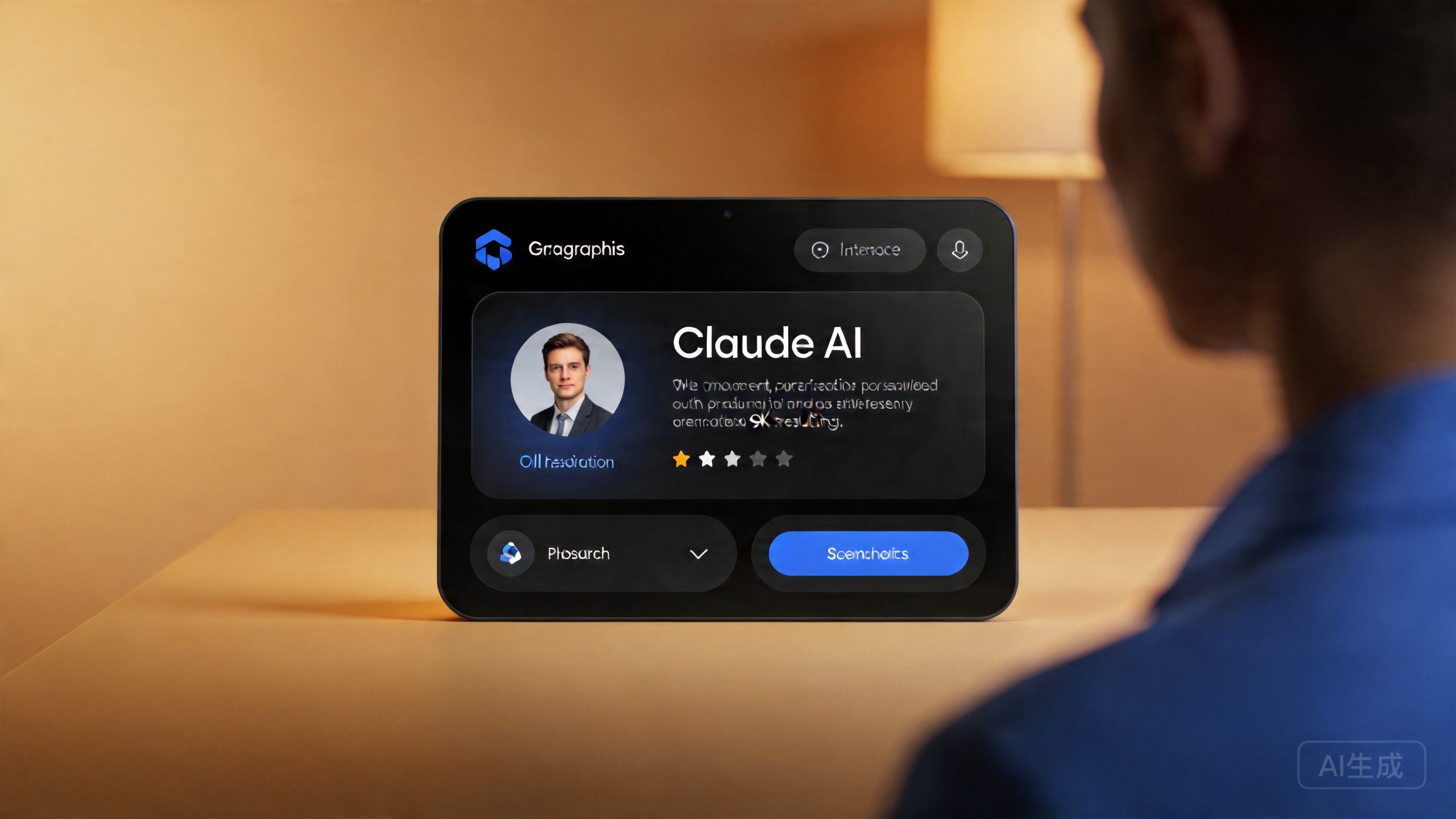
Claude Cowork is a system built by Anthropic that executes multi-step knowledge work on a user’s behalf. Unlike traditional chat-based AI assistants that respond to one question at a time, Cowork takes a high-level goal, then autonomously navigates local files, folders, and desktop applications to produce a finished deliverable.
Claude Cowork takes the outcome and handles the rest. It runs on desktop, where most knowledge work is done — in local files, folders, and the applications people use every day.
The agent operates directly within the Claude macOS and Windows desktop apps. Users grant it access to their local file system, describe what they need accomplished, and Cowork independently moves between applications, synthesizes information across multiple sources, and completes tasks without requiring step-by-step coordination from the user.
The underlying architecture draws heavily from Claude Code, Anthropic’s developer-focused AI coding assistant that has been widely praised since its February 2025 release. Cowork essentially extracts Claude Code’s agentic capabilities — file access, multi-step execution, tool integration — and wraps them in a simplified interface designed for non-technical users.
Why Anthropic Built Cowork
Anthropic’s decision to build Cowork was driven by an observation: non-technical teams within their own company — including Marketing and Data — were bypassing Claude’s standard chat interface in favor of Claude Code. They were drawn to its ability to handle complex, multi-step work like building tools, mining data, and automating repetitive processes.
This pattern extended beyond Anthropic’s walls. Knowledge workers across industries recognized that Claude Code’s agentic architecture could solve their daily challenges — file organization, document preparation, research synthesis — but were deterred by its developer-centric branding and terminal-based interface.
Claude Cowork is the answer. As Anthropic explains: “Most AI tools are built around the prompt. Claude Cowork is built around the outcome.”
Core Capabilities and Use Cases
Claude Cowork excels at tasks that are high-effort, repeatable, and time-consuming but not technically complex. Here are the primary workflows it handles:
1. Organizing and Managing Local Files
File systems accumulate faster than anyone can organize them. Users can point Cowork at a folder containing drafts, downloads, and attachments, and ask it to rename, sort, deduplicate, or surface relevant documents. This is particularly valuable for teams dealing with disorganized shared drives or accumulated project files.
2. Preparing Documents from Source Files
The hardest part of writing a report is rarely the writing itself — it’s the assembly and synthesis. Hand Cowork a set of source files, and it produces a structured draft. The work that remains for the human is refinement and judgment, not mechanical compilation.
3. Synthesizing Complex Research
Reading across dozens of sources takes time that most professionals simply don’t have. Share a research question and a collection of source documents, and Cowork identifies what’s relevant, cross-references findings, and returns a summary ready for review.
4. Extracting Data from Unstructured Files
Contracts, financial reports, and compliance records are dense by nature. Cowork reads through them and extracts the information that matters, returning it in a clear, structured format — saving hours of manual data entry.
Who Should Use Claude Cowork?
Anthropic designed Cowork for anyone whose workday includes tasks that are time-consuming but not technically complex. The target audience includes:
- Researchers and analysts who spend significant time synthesizing information from multiple sources
- Operations teams managing repetitive document workflows
- Legal professionals reviewing contracts and extracting key terms
- Finance teams processing reports and compiling data
- Marketing teams organizing campaign assets and drafting content from briefs
The common thread: people who work with documents, data, and files every day and would rather spend their time on judgment calls than on assembly.
Pricing and Availability
Claude Cowork is currently available through the Claude desktop application and requires a Max plan subscription. Anthropic offers Max tiers at $100 and $200 per month, positioning Cowork as a premium feature for power users and professionals.
During its initial research preview phase starting January 2026, Cowork was exclusively available to Max subscribers. The promotion to general availability in April 2026 expanded access within that tier, though Anthropic has not yet announced plans to bring Cowork to lower-priced Pro ($20/month) or Team ($25/user/month) plans.
This pricing strategy signals Anthropic’s positioning of Cowork as a productivity multiplier for professionals whose time is valuable enough to justify the premium cost. At $100/month, the tool targets individual knowledge workers; at $200/month, it serves users with heavier usage demands.
Agent Safety: Human Oversight at the Core
One of the most critical aspects of Claude Cowork’s design is its approach to agent safety. Anthropic has consistently emphasized that while Cowork autonomously completes tasks, consequential decisions remain with the user.
The system is built around three principles:
- Trust: Users explicitly grant file and application access; Cowork doesn’t silently read or modify anything without permission
- Access: The agent operates within defined boundaries and can be scoped to specific folders or file types
- Control: Users maintain oversight of the agent’s actions and can intervene or redirect at any point
This safety-first approach reflects Anthropic’s broader philosophy around AI alignment and responsible deployment. The company’s research on agent safety, including its “Claude’s Constitution” framework, underpins how Cowork makes decisions about what actions to take autonomously and what requires human confirmation.
Market Impact: Threatening Dozens of Startups
The launch of Claude Cowork has sent shockwaves through the AI productivity startup ecosystem. As Fortune noted in its coverage, Cowork “could threaten dozens of startups” that have built tools around file management, document assembly, and research synthesis.
The competitive implications are significant:
- Microsoft Copilot: Cowork directly competes with Microsoft’s AI productivity suite, offering a more autonomous alternative to Copilot’s chat-assisted workflows
- File management startups: Tools like Notion AI, Mem, and various document organization platforms face a well-funded competitor with superior reasoning capabilities
- Research and synthesis tools: Platforms like Elicit, Consensus, and Scite now compete with an agent that can perform similar functions natively within the user’s existing file system
Anthropic’s advantage is twofold: the underlying Claude model family (Sonnet, Opus, and the preview Mythos model) consistently ranks among the top performers in reasoning benchmarks, and the company’s safety-first approach appeals to enterprise buyers concerned about AI risk.
The Bigger Picture: The Agentic AI Revolution
Claude Cowork is part of a broader industry shift toward agentic AI — systems that don’t just answer questions but actively complete tasks. This movement has accelerated dramatically since late 2024, with major players racing to build agents that can operate across software applications and data sources.
What distinguishes Cowork from earlier agent experiments is its focus on knowledge work rather than software development or customer service. Previous agent frameworks like Anthropic’s Computer Use (October 2024) focused on UI automation, while Claude Code targeted developers. Cowork bridges the gap — bringing agent capabilities to the largest addressable market of office professionals.
Industry analysts note that this democratization of agent technology could reshape how organizations structure knowledge work. If one agent can handle file organization, research synthesis, and document drafting, the composition of many professional roles may fundamentally change.
Limitations to Keep in Mind
Despite its capabilities, Claude Cowork has important limitations that potential users should understand:
- Research preview status: As of early 2026, Cowork remains in research preview, meaning some features may change and bugs are expected
- Desktop app requirement: Cowork only works through the Claude desktop application (macOS and Windows), not through the web interface or API
- Max plan exclusivity: The premium pricing limits adoption to well-funded professionals or organizations
- Not fully autonomous: While Cowork handles multi-step tasks, it still requires user direction for goal-setting and oversight for consequential decisions
The Verdict: A New Paradigm for Knowledge Work
Claude Cowork represents a genuine paradigm shift in how knowledge workers interact with AI. By moving from chat-based interactions to outcome-driven delegation, Anthropic has created a tool that could save professionals hours of tedious work every week.
The question is no longer whether AI agents will transform knowledge work — Cowork demonstrates that the transformation is already underway. The question now is which organizations will adopt these tools fastest, and how quickly the broader ecosystem of productivity software adapts to compete.
For professionals drowning in unorganized files, fragmented research, and repetitive document tasks, Claude Cowork offers a compelling answer: stop doing the assembly work, and let the agent handle it.
Getting Started with Claude Cowork
If you’re interested in trying Claude Cowork, here’s what you need to know:
- Download the Claude desktop app for macOS or Windows from claude.com
- Subscribe to a Max plan ($100 or $200 per month)
- Grant Cowork access to the folders and applications you want it to work with
- Start with a simple task — like organizing a messy downloads folder — to see how the agent works
As the feature moves out of research preview and into general availability, Anthropic is likely to expand access and add new capabilities. For now, early adopters on Max plans get a first look at what could become one of the most important productivity tools of the decade.
The future of knowledge work isn’t about prompting AI more effectively — it’s about delegating outcomes and getting results. Claude Cowork is Anthropic’s bet on that future.
📖 Related: Anthropic’s Cowork Brings AI Agent Power to Everyday Workers — No Terminal Required
📖 Related: Anthropic Launches Cowork: Claude’s AI Agent Steps Off the Terminal and Onto Your Desktop
📖 Related: Anthropic’s Claude Cowork: The AI Agent That Does Your Paperwork While You Step Away