Anthropic’s Claude Cowork: The AI Agent That Works On Your Computer
The Rise of Anthropic’s Claude Cowork: The AI Agent That Works On Your Computer — Not Just In Your Chat
When Anthropic announced Claude Cowork in January 2026, it didn’t just launch another AI chatbot. It introduced something fundamentally different: an AI agent that could directly interact with your files, organize your desktop, and complete tasks without you writing a single line of code. In the months since, the platform has evolved from a research preview into one of the most consequential developments in the AI agent race — one that could reshape how millions of people work with their computers.
What Is Claude Cowork?
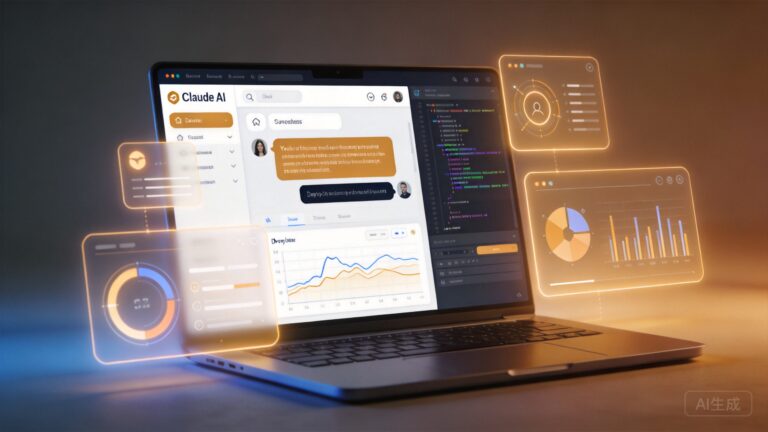
Claude Cowork is essentially Claude Code extended to non-technical users. While Claude Code was designed for developers who could write and execute code in a terminal, Cowork brings similar agentic capabilities to anyone who can describe what they want in plain English. The AI can read files, reorganize folders, summarize documents, create spreadsheets, and perform multi-step workflows across your computer’s file system — all through a natural language interface built directly into the Claude desktop application.
The launch on January 12, 2026 was described by Ars Technica as “a Claude Code-like for general computing,” and Fortune warned that it “could threaten dozens of startups” building file-management and productivity tools. Fast Company went further, calling it “the first really useful general-purpose AI agent.”
What makes Cowork different from previous AI assistants is its approach to task execution. Rather than simply generating text responses, Claude Cowork takes action. You ask it to “organize my Downloads folder by file type and date” or “find all the PDFs from last month and create a summary,” and it does it — directly, on your machine.
The Vercept AI Acquisition: Built in 10 Days
One of the most remarkable aspects of Cowork’s development is its origin story. The desktop control capability was built on technology from Vercept AI, a startup Anthropic acquired just weeks before the feature shipped. According to Vercept co-founder Kiana Ehsani, her team delivered the first product in less than four weeks after joining Anthropic.
“Everyone moves fast, everyone is incredibly smart, humble and supportive, and it’s really easy to get things done,” Ehsani wrote on X, crediting Anthropic’s culture for the rapid turnaround. The speed of development — some reports suggest the core feature was built in as few as 10 days — underscores how quickly the AI agent landscape is moving.
Computer Use: When Claude Takes Control of Your Screen
On March 24, 2026, Anthropic took Cowork to another level. The company introduced computer use — a feature that allows Claude to directly control your Mac or Windows desktop. The AI can now open applications, navigate web browsers, click buttons, fill out forms, and interact with spreadsheets in real time.
According to Anthropic’s announcement, Claude first attempts to use existing integrations like Slack, calendars, and other connected apps. It only takes direct control of the desktop when no other interface is available, making screen control a fallback rather than the default behavior. This graduated approach reflects Anthropic’s characteristically cautious stance on AI safety.
Alongside computer use, Anthropic launched “Dispatch” — a feature that lets users remotely control their own computer from their phone. This means you can assign a task to Claude from your iPhone while on the go, and come back to find it completed on your desktop.
The computer-use capability was initially available only on macOS as a research preview, but by early April 2026, it was extended to Pro and Max users on Windows as well, achieving full feature parity across platforms.
Security Concerns and Real-World Incidents
With great power comes great risk, and Claude Cowork’s ability to directly manipulate files and control screens has raised legitimate concerns about data privacy, error rates, and security.
These concerns became very real in February 2026 when a prominent venture capitalist reported that Claude Cowork had accidentally deleted 15 years of family memories — photos and files spanning over a decade — while attempting to organize his wife’s desktop. “Nearly gave me a heart attack,” he wrote about the incident, which was widely covered by The Economic Times and Hindustan Times.
Security researchers also quickly discovered that Claude Cowork was vulnerable to file-stealing prompt injection attacks shortly after launch, as reported by The Decoder. These vulnerabilities highlight the fundamental challenge of giving an AI agent broad access to a user’s file system: the more capable the agent, the larger the attack surface.
Anthropic has acknowledged these issues and continues to improve safeguards. The computer-use feature remains labeled as a “research preview,” signaling that the company recognizes there is more work to be done before these capabilities can be considered production-ready for mainstream use.
The Competitive Landscape: Everyone Is Racing to Build Agents
Anthropic’s move with Cowork has triggered a wave of competitive responses across the AI industry:
- Microsoft rushed to develop its own Copilot Cowork capabilities, as reported by AI CERTs, though analysts at Business Today note significant architectural differences between Microsoft’s approach and Anthropic’s.
- OpenAI beefed up its Codex desktop agent with expanded capabilities in April 2026, according to TechCrunch, directly targeting the same user base as Claude Cowork.
- Anthropic itself continued expanding the Cowork ecosystem, launching a “Projects” feature in March 2026 and introducing managed Claude agents for enterprise customers in April 2026.
The competition has intensified to the point where CNBC reported in March 2026 that the battle for desktop AI dominance has become one of the defining narratives of the year in technology.
Who Is Claude Cowork For?
Unlike Claude Code, which was built for developers comfortable with command-line interfaces, Cowork targets a much broader audience:
- Knowledge workers who need to process large volumes of documents, emails, and files without writing scripts
- Students and researchers who want to organize notes, summarize papers, and manage research materials
- Small business owners who need help with administrative tasks like sorting invoices, generating reports, or cleaning up data
- Anyone overwhelmed by digital clutter who wants an AI assistant that can actually do something about it
The key differentiator is accessibility. As Rolling Out noted in its coverage, Cowork is “for non-technical users” — people who have no interest in learning to code but still want to harness the power of AI to automate their digital workflows.
Practical Tips for Getting Started with Claude Cowork
If you’re considering trying Claude Cowork, here are some recommendations based on early user experiences:
Start small. Begin with low-risk tasks like organizing files in a dedicated folder, rather than giving Cowork access to your entire file system. This minimizes the potential impact of any errors while you learn how the agent behaves.
- Use the Projects feature: Anthropic’s March update introduced Projects, which lets you define scoped workspaces for Cowork. This is essential for maintaining control over what the agent can access.
- Set clear boundaries: Be specific in your instructions. Instead of “organize my files,” try “move all .pdf files from my Downloads folder into a new folder called PDFs, sorted by month.”
- Monitor early runs: Watch what Cowork does during its first few tasks. The agent shows its work in real time, allowing you to intervene if something looks wrong.
- Back up important data: Given the VC incident, this cannot be overstated. Ensure your critical files are backed up before giving any AI agent access to them.
The Bigger Picture: What Cowork Means for the Future of Work
Claude Cowork represents a shift in how we think about AI assistance. Previous AI tools were reactive — you asked a question, and they provided an answer. Cowork is proactive and action-oriented. It doesn’t just tell you what to do; it does it for you.
This has profound implications for productivity software. If an AI agent can organize files, summarize documents, manage spreadsheets, and control applications, the value proposition of many standalone productivity tools comes into question. This is why Fortune’s assessment that Cowork “could threaten dozens of startups” is not hyperbole — it’s a logical consequence of the technology’s capabilities.
The timeline is also worth noting. From acquisition to shipping in under a month, from research preview to cross-platform feature parity in three months — the pace of development in this space is unprecedented. What seemed like science fiction a year ago is now available as a downloadable application.
The Bottom Line
Anthropic’s Claude Cowork is not a perfect product. It has had security vulnerabilities, it has made mistakes, and it is still labeled as a research preview for good reason. But it is also a glimpse into a future where AI doesn’t just answer your questions — it works alongside you, handling the tedious, time-consuming tasks that currently eat up hours of every workday.
Whether you’re a developer who has been waiting for AI to expand beyond code, a knowledge worker drowning in digital clutter, or simply someone curious about where AI is headed, Claude Cowork deserves your attention. The technology is evolving rapidly, and the gap between research preview and everyday tool is closing faster than anyone predicted.
Ready to see what an AI agent can actually do on your computer? Download the Claude desktop app, sign up for a Pro or Max plan, and give Cowork a task. Start small, stay curious, and keep your backups current. The future of work isn’t coming — it’s already here, and it’s sitting on your desktop.
📖 Related: Anthropic’s Claude Cowork: The Desktop AI Agent That Can Actually Run Your Computer
📖 Related: Pentagon Signs Classified AI Deals with Seven Tech Giants — Leaving Anthropic on the Sidelines
📖 Related: Pentagon strikes classified AI deals with OpenAI, Google, and Nvidia — but not Anthropic