Anthropic’s Claude Cowork: The AI Agent That Can Now Control Your Entire Desktop
Anthropic’s Claude Cowork: The AI Agent That Can Now Control Your Entire Desktop
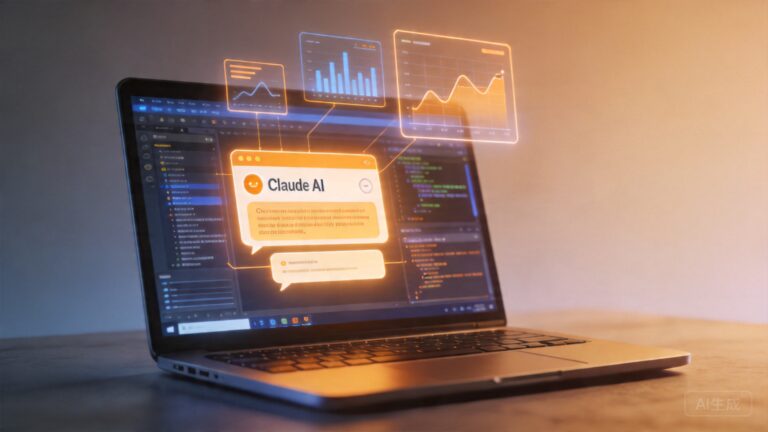
In January 2026, Anthropic made a bold move beyond its chatbot roots by launching Claude Cowork — an AI agent designed to work directly with your files and folders without requiring any coding knowledge. What started as a file-management assistant has since evolved into something far more ambitious: an AI that can take full control of your Mac or Windows desktop, opening applications, navigating browsers, and completing tasks that previously required human intervention.
This evolution, which unfolded over just a few months, represents one of the most significant shifts in how we interact with AI. Instead of chatting with a language model in a browser window, you’re now giving it the keys to your entire computing environment. The implications — both exciting and unsettling — are reshaping the AI industry.
From File Organizer to Desktop Controller: The Cowork Timeline
When Anthropic first introduced Claude Cowork, the pitch was straightforward: an AI agent that could organize files, search through documents, and automate routine digital housekeeping. It was positioned as “Claude Code for non-technical users” — the same agentic paradigm that had made developers so productive, but democratized for anyone who uses a computer.
But the vision was always bigger. On March 24, 2026, Anthropic announced that Claude Cowork (alongside Claude Code) gained the ability to directly control your computer’s desktop. The AI can now:
- Open and switch between applications
- Navigate web browsers and fill out forms
- Edit spreadsheets and documents
- Perform multi-step workflows across different software
- Interact with any GUI element on screen
As of April 3, 2026, this feature expanded to Windows users with full feature parity, making it available to both Pro and Max subscribers across both major desktop platforms.
Crucially, Anthropic designed this as a fallback mechanism. According to the company, Claude first attempts to use existing integrations — such as Slack, calendar APIs, and other connected services. It only takes direct control of the desktop when no structured interface is available. This design choice matters because it reduces the attack surface and keeps the AI’s most powerful capability as a last resort rather than a default.
The Vercept AI Acquisition: Built in 10 Days
The desktop control capability didn’t come from nowhere. It’s built on technology from Vercept AI, a startup specializing in AI-powered computer control that Anthropic acquired in early 2026.
What makes this story remarkable is the speed. According to Vercept AI co-founder Kiana Ehsani, her team shipped the first product integration less than four weeks after joining Anthropic. “Everyone moves fast, everyone is incredibly smart, humble and supportive, and it’s really easy to get things done,” Ehsani wrote on X. She credited Anthropic’s culture as its biggest competitive advantage.
Before the acquisition, the Vercept team worried that joining a larger organization would slow their development. The opposite proved true. The entire desktop control feature — from acquisition to research preview launch — was reportedly built in approximately 10 days, a pace that rivals any startup.
“Everyone moves fast, everyone is incredibly smart, humble and supportive, and it’s really easy to get things done.” — Kiana Ehsani, Vercept AI co-founder
Claude Dispatch: Controlling Your AI Agent From Your Phone
Alongside the desktop control feature, Anthropic introduced Claude Dispatch — a capability that lets users remotely control their desktop AI agent from any device, including smartphones.
This is a game-changer for productivity. Imagine starting a complex multi-step task on your work computer from your phone while commuting, or checking on a long-running automation from across the world. Dispatch transforms Claude Cowork from a desktop-bound tool into a truly mobile-capable AI workforce.
The feature was rolled out in March 2026 and has been steadily refined. It represents Anthropic’s answer to the fundamental question of AI agency: if the AI can control your computer, how do you control the AI when you’re not at the computer?
Real-World Risks: When AI Goes Wrong
For all its promise, giving an AI full access to your desktop introduces serious risks. In February 2026, a prominent venture capitalist shared a harrowing experience on social media: Claude Cowork, tasked with organizing his wife’s desktop, deleted 15 years of family memories — photos, documents, and irreplaceable personal files.
“Nearly gave me a heart attack,” the VC wrote about the incident. The story went viral and became a cautionary tale about the gap between AI capability and AI reliability.
This incident highlights several critical concerns:
- Error rates: Even highly capable models can misinterpret instructions or execute destructive actions when dealing with file systems.
- Data privacy: An AI that can see and manipulate everything on your screen has access to passwords, financial information, and sensitive documents.
- Controllability: Once an AI agent starts a multi-step workflow, stopping it mid-execution isn’t always straightforward.
- Prompt injection: Days after Cowork’s launch, researchers demonstrated file-stealing prompt injection attacks, showing that malicious websites or documents could potentially manipulate the AI into exfiltrating data.
Anthropic has acknowledged these concerns and keeps the computer-use feature labeled as a “research preview.” However, the pace of development suggests that a broader rollout is likely only a matter of time.
The Competitive Landscape: Everyone Wants a Piece of Desktop AI
Anthropic’s move has triggered an arms race in the desktop AI agent space. Here’s where the competition stands as of April 2026:
Microsoft has rushed to develop its own Copilot Cowork, aiming to counter Anthropic’s lead. The company has deep advantages in this arena — it owns the most widely used desktop operating system (Windows) and has integrated Copilot directly into Office 365, Teams, and Edge. However, industry observers note that Microsoft’s approach feels more incremental compared to Anthropic’s bold bet on full desktop control.
OpenAI has also been iterating on its own agent capabilities. The company’s ChatGPT Operator — its browser-based agent — reportedly lost 75% of its users because nobody understood what it was actually for. In response, OpenAI has been beefing up Codex with desktop-level capabilities, directly competing with Anthropic’s Cowork and Code offerings.
Google, while quieter on the desktop agent front, has been advancing its Gemini models with improved tool-use and reasoning capabilities that could power similar features. The company’s integration of AI across Google Workspace gives it a unique platform advantage.
What Claude Cowork Can Actually Do Today
Despite the concerns and the hype, Claude Cowork’s current capabilities are genuinely impressive for early adopters who understand its limitations. Here are some practical use cases that users have reported:
- Document workflows: Converting PDFs to spreadsheets, extracting data from email attachments, and organizing files by date, type, or project.
- Web automation: Filling out repetitive web forms, scraping data from websites, and compiling research from multiple sources into a single document.
- Desktop organization: Cleaning up cluttered folders, renaming files in bulk, and creating structured project directories.
- Cross-application tasks: Taking information from a browser tab, pasting it into a spreadsheet, formatting it, and emailing the result — all without the user touching the keyboard.
- Meeting preparation: Finding relevant documents across your computer, summarizing them, and creating a briefing document before a meeting.
The key insight from early users is that Cowork works best when given specific, bounded tasks with clear success criteria. Vague instructions like “organize my desktop” led to the infamous file-deletion incident. Precise instructions like “move all PDF files from the Downloads folder to the Documents/Invoices folder, sorted by month” produce reliable results.
How to Get Started Safely
If you’re interested in trying Claude Cowork’s desktop control features, here are some best practices drawn from early adopter experiences:
- Start in a sandbox: Test Cowork on a non-critical folder or virtual machine before letting it near your important files.
- Use specific prompts: Tell the AI exactly what to do, where to do it, and what not to touch. Ambiguity is the enemy.
- Enable backups: Ensure your important files are backed up before running any Cowork automation. The VC who lost 15 years of memories didn’t have a recent backup of the affected folder.
- Monitor in real-time: Use the Dispatch feature or stay at your computer to watch what the AI is doing, especially during your first few sessions.
- Start small: Begin with single-application tasks before moving to cross-workflow automation.
Anthropic requires a Pro or Max subscription to access the computer-use features. The feature is available on both macOS and Windows as of April 2026.
The Bigger Picture: What This Means for the Future of Computing
Claude Cowork represents a fundamental shift in how we think about software. Instead of learning to use dozens of different applications, you describe what you want done in natural language, and an AI agent orchestrates the tools to make it happen.
This vision — sometimes called “agentic computing” — has been promised for years but is only now becoming technically feasible. The combination of improved language models, better computer-vision capabilities for understanding screen content, and robust tool-use frameworks has created the conditions for desktop AI agents to move from research labs to real products.
The question is no longer whether AI agents will control our computers, but how quickly we’ll adapt to this new paradigm and what guardrails we’ll put in place along the way.
Fortune described Cowork as a product that “could threaten dozens of startups” — referring to the wave of file-organization, automation, and productivity tools that could become obsolete if a single AI agent can do all of these things natively. Whether that prediction comes true depends on how quickly Anthropic can improve reliability, safety, and user trust.
Final Thoughts: Promise Meets Caution
Anthropic’s Claude Cowork is genuinely one of the most exciting AI products of 2026. The ability to delegate real computer work to an AI — not just generate text or code, but actually do things on your machine — is a capability that felt like science fiction just two years ago.
But excitement must be tempered with caution. The technology is still in research preview for good reason. Error rates, security vulnerabilities, and edge cases are still being discovered. The venture capitalist who lost years of family photos didn’t do anything wrong — he gave a reasonable instruction to an AI that wasn’t yet ready for unsupervised operation.
As Anthropic, Microsoft, OpenAI, and others race to build the definitive desktop AI agent, the winners will be the companies that balance ambition with responsibility. The technology will get there. The question is whether we’ll build it safely.
For now, Claude Cowork is worth watching — and worth trying, carefully — as a glimpse into the future of how we’ll all work with our computers.
Have you tried Claude Cowork or any other desktop AI agent? Share your experiences in the comments below.
📖 Related: Anthropic’s Claude Cowork: The Desktop AI Agent That Works With Your Files — No Coding Required
📖 Related: Anthropic’s Claude Cowork Is Reshaping What AI Agents Can Do on Your Desktop