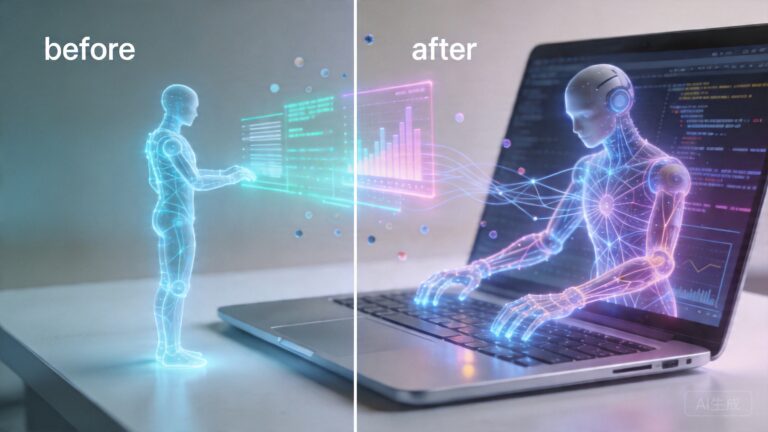
Anthropic’s Claude Cowork: The AI Agent That Actually Works on Your Desktop
Anthropic’s Claude Cowork: The AI Agent That Actually Works on Your Desktop
In January 2026, Anthropic made a bold move that shifted the entire AI industry’s trajectory. The company launched Claude Cowork, a desktop AI agent that goes far beyond chat-based interactions — it can open, read, edit, and organize files on your computer, manage your documents, automate repetitive tasks, and essentially act as a digital colleague that works alongside you. No coding required.
Three months later, the landscape has evolved even further. As of April 2026, Claude Cowork has expanded to Windows with full feature parity, gained the ability to control your entire computer (Mac and PC), and introduced a Projects feature for organized multi-step workflows. Meanwhile, competitors like OpenAI’s Codex and Microsoft’s Copilot Cowork are racing to catch up. Here is everything you need to know about the product that is redefining what an AI agent can do.
What Is Claude Cowork, and How Does It Differ From Claude Code?
Anthropic already had Claude Code, a terminal-based AI agent designed specifically for software developers. Claude Code could write code, run tests, fix bugs, and even commit changes to git repositories — all through natural language commands. It was powerful, but it required technical knowledge to use.
Claude Cowork is Claude Code for everyone else. Instead of a command-line interface, Cowork runs as a desktop application with a graphical interface. It can access your files and folders, read spreadsheets, draft documents, organize data, and perform complex multi-step workflows — all through conversational prompts. Think of it as a highly capable assistant who can sit at your computer and do real work, not just answer questions.
According to Ars Technica, Cowork is essentially “a Claude Code-like for general computing” — the same underlying agent architecture, but applied to the full spectrum of desktop tasks rather than just software development.
Key Features That Set Cowork Apart
- File System Access: Cowork can browse, read, create, and modify files across your computer. It works with spreadsheets, presentations, text documents, PDFs, and virtually any file format. You can ask it to “organize my downloads folder by date” or “find all invoices from Q3 and summarize the totals.”
- Desktop Control: In a major March 2026 update, Anthropic gave Cowork the ability to control your entire desktop — clicking buttons, navigating menus, filling forms, and interacting with applications the way a human would. This moved Cowork from a file assistant to a full computer operator.
- Projects: Launched in March 2026, the Projects feature lets users create persistent workspaces with specific instructions, file references, and goals. A “Projects” setup means Cowork remembers your context across sessions, building a deeper understanding of your ongoing work.
- Remote Control via Phone: In another March update, Anthropic introduced the ability to control your desktop Cowork session from your phone. You can start, monitor, and guide Cowork tasks remotely — a feature that Forbes highlighted as a game-changer for mobile-first professionals.
- No Coding Required: Unlike Claude Code, which requires familiarity with terminal commands and development environments, Cowork is designed for any computer user. If you can describe what you want done, Cowork can attempt to do it.
The Timeline: How Cowork Evolved in Three Months
The pace of development has been remarkable. Here is a timeline of major Cowork milestones:
- January 12, 2026: Anthropic announces Claude Cowork for Mac. Initially available to select users, it focuses on file management and document workflows.
- January 16, 2026: Cowork opens to all Pro subscribers, dramatically expanding its user base.
- February 11, 2026: Windows launch with full feature parity. As VentureBeat reported, Cowork “finally lands on Windows — and it wants to automate your workday.”
- March 9, 2026: Microsoft announces Copilot Cowork with help from Anthropic — a cloud-powered AI agent that works across Microsoft 365 apps, signaling deep enterprise integration.
- March 24, 2026: Full computer control arrives. Both Claude Code and Cowork can now take control of your Mac or Windows desktop, as reported by CNBC and The Verge.
- March 2026: Projects feature rolls out for desktop Cowork, enabling persistent, organized workspaces.
- April 3, 2026: Cowork gains even deeper desktop control capabilities, according to the-decoder.com.
- April 9, 2026: Anthropic launches Managed Claude Agents for enterprises, extending the Cowork philosophy to business-scale deployments.
Why Cowork Matters: The First Truly Useful General-Purpose AI Agent
Fast Company called Cowork “the first really useful general-purpose AI agent” — and for good reason. Previous AI agents either specialized in narrow domains (coding, image generation, text summarization) or promised too much and delivered too little. Cowork strikes a practical balance: it does not claim to be sentient or autonomous, but it reliably performs concrete, useful tasks on your actual computer.
Fortune went further, suggesting Cowork “could threaten dozens of startups” — particularly those building AI-powered file management, document automation, and personal assistant tools. When a major AI lab bundles these capabilities into a single, well-integrated product, the standalone alternatives face an uphill battle.
The competitive implications extend beyond startups. Tom’s Guide tested Cowork and concluded it “feels more like a coworker than a chatbot” — a subtle but critical distinction. Chatbots answer questions; coworkers get things done. That shift in user experience is what makes Cowork a genuine product category, not just another feature.
How Cowork Compares to the Competition
The AI agent space is heating up fast. Here is how Cowork stacks up against key competitors:
OpenAI’s Codex: Originally a coding-focused agent, Codex has been expanding into desktop control. In April 2026, TechCrunch reported that OpenAI gave Codex “more power over your desktop” in a direct response to Cowork. However, OpenAI also folded Codex back into GPT-5.5 as a dedicated model, suggesting some strategic uncertainty about the product’s direction.
Microsoft Copilot Cowork: Announced in March 2026 with Anthropic’s help, this is a cloud-powered agent that works across Microsoft 365 apps. It is more enterprise-focused than Cowork, targeting organizational workflows rather than individual desktop tasks. The partnership between Microsoft and Anthropic suggests that Cowork’s underlying technology may power both products.
Google Gemini: Google’s approach has been different — focusing on generating documents, spreadsheets, and presentations directly within the chat interface. As of April 2026, Gemini can create files in various formats (Google Docs, Word, Excel, PDF) on demand, but it lacks the deep desktop integration that Cowork offers.
The key differentiator for Cowork is generality. It is not limited to coding, or office suites, or web browsing — it operates at the operating system level, giving it access to any application and any file on your machine.
Practical Use Cases: What Can You Actually Do With Cowork?
Based on reports from early adopters and reviewers, here are the most impactful ways people are using Claude Cowork:
- Document Processing: “Take these 50 PDF invoices, extract the key data, and put it in a spreadsheet with totals and categories.”
- Research and Summarization: “Read all the reports in this folder and create a briefing document with the main findings and recommendations.”
- Data Cleanup: “This CSV file has messy formatting — standardize the dates, remove duplicates, and fill in missing values where possible.”
- Email Drafting: “Draft responses to these 10 customer inquiries based on our FAQ document and our tone guidelines.”
- File Organization: “Go through my downloads folder, categorize everything by type and date, and create a clean folder structure.”
- Presentation Creation: “Turn this project report into a 15-slide presentation with key data visualizations.”
- Workflow Automation: Repetitive, multi-step processes that previously took hours can now be delegated to Cowork with a single prompt.
Security and Privacy Considerations
Giving an AI agent full access to your files and desktop raises legitimate security concerns. Anthropic has addressed these through several mechanisms:
- User Confirmation: Cowork asks for permission before performing sensitive actions like deleting files or sending messages.
- Sandboxed Access: The agent operates within defined boundaries, with users able to specify which folders and applications it can access.
- Transparency: Cowork shows its actions in real-time, so you can see exactly what it is doing and intervene at any point.
- Enterprise Controls: The Managed Claude Agents offering for enterprises includes additional governance features, audit logs, and administrative controls.
Nevertheless, users should exercise caution. As PCWorld noted in a March 2026 article titled “Your next PC will likely run on AI agents,” the industry is moving toward a future where AI agents are commonplace — but the security models are still maturing.
The Bigger Picture: Where AI Agents Are Headed
Claude Cowork is part of a broader shift in how we think about AI. The era of chatbots — where you type a question and get a text response — is giving way to the era of agents, where AI takes action on your behalf.
Anthropic’s CEO, Dario Amodei, has been vocal about this transition. The company’s rapid iteration on Cowork — adding computer control, Projects, remote access, and enterprise features in just three months — signals a strategic bet that action-oriented AI will be the dominant paradigm for the next wave of productivity tools.
The investment numbers back this up. As of April 2026, Anthropic is reviewing investor offers that would value the company at over $900 billion, potentially overtaking OpenAI as the world’s most valuable AI startup. Google has committed $10 billion (with up to $30 billion more), and Amazon is investing $5 billion (with plans for an additional $20 billion).
What to Watch Next
Several developments are worth monitoring in the coming months:
- Anthropic’s IPO: The company is reportedly considering a public offering starting in October 2026, which could reshape the AI investment landscape.
- OpenAI’s Response: With Codex folding into GPT-5.5 and desktop capabilities expanding, OpenAI is clearly positioning to compete directly with Cowork.
- Enterprise Adoption: The launch of Managed Claude Agents suggests Anthropic is targeting large-scale business deployments, which could drive significant revenue growth.
- Regulatory Scrutiny: The White House’s involvement in AI policy — including its recent stance on Anthropic’s Mythos model — could affect how aggressively companies deploy agent-based AI.
Final Verdict
Claude Cowork represents a genuine leap forward in AI utility. It is not perfect — early users report occasional mistakes in file operations and a learning curve for complex tasks — but it delivers on its core promise: an AI that can actually do things on your computer, not just talk about them.
For knowledge workers, the value proposition is clear. Cowork can handle the tedious, repetitive tasks that drain productivity while you focus on the creative and strategic work that matters. As the feature set continues to expand and the underlying models improve, Cowork is positioning itself as an indispensable tool for the modern workforce.
The question is no longer whether AI agents will transform how we work. With Claude Cowork, that transformation has already begun.
Ready to Try Claude Cowork?
If you are a Claude Pro subscriber, you already have access to Cowork on both Mac and Windows. Download the latest version of Claude Desktop from anthropic.com, sign in with your Pro account, and give it a try. Start with a simple task — like organizing a folder or summarizing a set of documents — and see what happens.
For enterprise teams, the Managed Claude Agents offering provides a path to deploying AI-powered workflows at scale. Visit Anthropic’s enterprise page to learn more about pricing and deployment options.
What tasks would you delegate to an AI coworker? Share your thoughts in the comments below, and subscribe to our newsletter for the latest AI news and analysis.
📖 Related: Anthropic’s Claude Cowork: The AI Agent That Turns Your Desktop Into a Smart Workspace
📖 Related: Anthropic’s Claude Cowork: The AI Desktop Agent That Changes Everything
📖 Related: Anthropic’s Claude Cowork: The Desktop AI Agent That Changes Everything