Anthropic’s Claude Cowork: How an AI Agent Built in 10 Days Is Reshaping the Desktop
Anthropic’s Claude Cowork: How an AI Agent Built in 10 Days Is Reshaping the Desktop
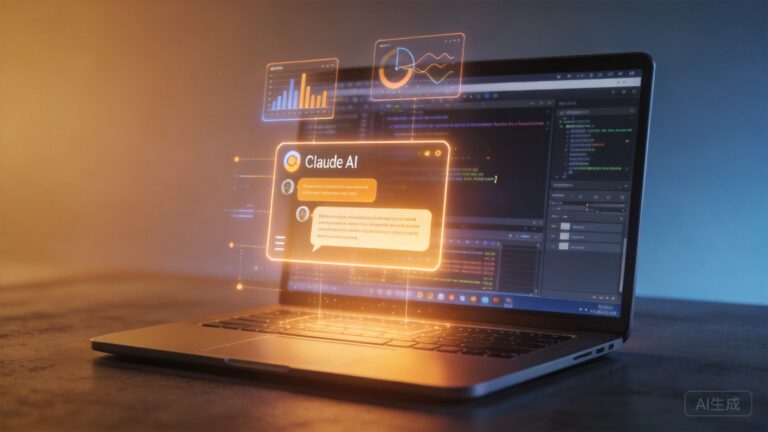
When Anthropic launched Claude Cowork on January 12, 2026, the tech industry barely had time to catch its breath. The San Francisco-based AI safety company had just introduced what it called a “general-purpose AI agent” — a tool that lets anyone, regardless of technical skill, assign tasks to Claude and watch it work autonomously across files, folders, and desktop applications. The most remarkable detail? Anthropic built Cowork in approximately 10 days, using Claude Code itself.
That’s right. An AI agent built itself an agent for non-developers in a week and a half. It’s a moment that captures the accelerating pace of AI development in 2026 — and one that signals a fundamental shift in how knowledge workers will interact with their computers.
What Is Claude Cowork, Exactly?
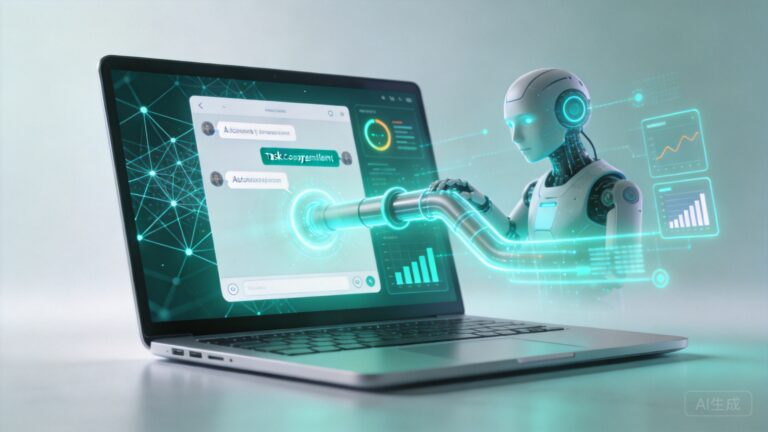
Claude Cowork is Anthropic’s agentic AI product designed specifically for knowledge work. Unlike traditional chatbots that respond to individual prompts, Cowork takes an outcome-oriented approach. You give it a goal — “organize this folder of 200 downloads,” “draft a report from these source files,” “extract key terms from these contracts” — and Claude works across your local files and applications to deliver a finished result.
The product runs inside the Claude Desktop app on both Mac and Windows. Users grant Claude access to specific folders, then describe what they need in natural language. Claude then moves between files, applications, and data sources, synthesizing information and completing multi-step tasks without requiring the user to coordinate each individual step.
“Most AI assistants require users to break work into individual prompts,” Anthropic explained on its product page. “Claude Cowork takes the outcome and handles the rest.”
This is a significant departure from how most people use AI tools today. Instead of a back-and-forth conversation, Cowork operates more like a junior colleague who receives a brief and returns with completed work. According to Anthropic’s internal observations, non-technical teams — including marketing and data analysis groups — had already been bypassing Claude’s chat interface in favor of Claude Code, drawn to its ability to handle complex, multi-step workflows. Cowork is the answer to that demand, offering the same capability with a dramatically simplified experience.
Key Workflows and Use Cases
Anthropic has positioned Cowork around four primary use cases that reflect the most common pain points for knowledge workers:
- Organizing and managing local files. File systems accumulate faster than anyone can organize them. Point Claude at a folder of drafts, downloads, and attachments, and ask it to rename, sort, deduplicate, or surface what’s relevant.
- Preparing documents from source files. The hardest part of writing a report is rarely the writing itself. Hand off a set of source files and Cowork produces a structured draft, handling assembly and synthesis so the remaining work is refinement rather than creation.
- Synthesizing complex research. Reading across dozens of sources takes time most professionals don’t have. Share a question and a set of sources, and Claude identifies what’s relevant and returns a summary ready for review.
- Extracting data from unstructured files. Contracts, reports, and records are dense by nature. Claude reads through them and returns the information that matters in a clear, structured format.
Anthropic found that with Cowork, not only does work get done faster, but tedious tasks that might otherwise get skipped — like scanning data or reviewing feedback — now actually get completed, leading to better business decisions.
From Files to Full Desktop Control
The January launch was just the beginning. In March 2026, Anthropic significantly expanded Cowork’s capabilities by adding computer use — the ability for Claude to directly control a person’s computer to complete tasks. Users can now message Claude a task from their smartphone, and the AI agent will complete that task autonomously on their desktop computer.
After being prompted, Claude can open applications, navigate a web browser, and fill in spreadsheets. In a demonstration video, Anthropic showed a user who was running late for a meeting asking Claude to export a pitch deck as a PDF and attach it to a meeting invite — a task Claude completed end-to-end without further intervention.
This feature, called Dispatch, enables continuous conversation with Claude from a phone or desktop, allowing users to assign tasks remotely. It was a direct response to the viral success of OpenClaw, an open-source AI agent that went viral in early 2026 by letting users message AI agents through WhatsApp or Telegram to carry out tasks on their local machines.
“Computer use is still early compared to Claude’s ability to code or interact with text,” Anthropic cautioned in its announcement. “Claude can make mistakes, and while we continue to improve our safeguards, threats are constantly evolving.” The company emphasized that Claude will always request permission before accessing new applications, building human oversight into the agent’s workflow.
“We observed that knowledge workers needed something that could take on a full task, not just respond to one question at a time, and that the people who needed it most were not developers.” — Anthropic
The Desktop AI Agent Race Heats Up
Claude Cowork’s launch didn’t happen in a vacuum. It arrived as part of an intensifying competition among major tech companies to own the desktop AI agent experience.
OpenAI, Anthropic’s chief rival, has been aggressively expanding its own desktop agent capabilities. In April 2026, OpenAI announced a beefed-up version of Codex that gives it more power over the user’s desktop, directly competing with Cowork’s feature set. OpenAI also hired Peter Steinberger, the creator of OpenClaw, in February 2026 to “drive the next generation of personal agents.”
Microsoft, too, has rushed to develop competing AI agent features amid what some industry observers call “security jitters” about ceding the desktop agent space to startups and open-source projects. The company has been accelerating its Copilot agent development to rival both Cowork and OpenClaw.
The competitive landscape received a high-profile endorsement when Nvidia CEO Jensen Huang declared that OpenClaw is “definitely the next ChatGPT,” comparing its potential impact to the moment that brought generative AI into the mainstream. Nvidia subsequently announced NemoClaw, an enterprise-grade version of the open-source agent.
Pricing and Availability
Claude Cowork is included in Anthropic’s higher-tier subscription plans, starting at approximately $20 per user per month for the Pro tier, with Max and Enterprise tiers offering higher usage limits at up to $200 per user per month. The product is available on both macOS and Windows, with mobile dispatch capabilities for remote task assignment.
For enterprises, Anthropic also launched managed Claude Agents in April 2026, offering organizations a way to deploy and govern AI agents at scale with additional oversight and compliance features.
Who Should Use Claude Cowork?
Anthropic is clear about its target audience: anyone whose workday includes tasks that are time-consuming but not technically complex. This includes researchers, analysts, operations teams, legal professionals, and finance teams — people who work with documents, data, and files every day and would rather spend their time on judgment calls than on assembly work.
The product is explicitly not aimed at developers, who already have Claude Code at their disposal. Instead, Cowork democratizes the kind of agentic AI capability that was previously available only to technical users who could write prompts in code-friendly formats.
Safety and Human Oversight
Perhaps the most critical aspect of Cowork’s design is its approach to agent safety. Anthropic has built the tool with human oversight as a core principle. While Claude completes tasks autonomously, consequential decisions remain with the user. The agent requests permission before accessing new applications, and users maintain visibility into what Claude is doing at all times.
Anthropic’s broader approach to agent safety — covering trust, access, and control — is documented in the company’s published research. The company acknowledges that computer use capabilities are still in early stages and that the threat landscape for AI agents is constantly evolving.
What This Means for the Future of Work
Claude Cowork represents a bet that the future of AI productivity isn’t in better chatbots — it’s in agents that can take ownership of tasks from start to finish. The implication is significant: if an AI can reliably organize files, draft reports, synthesize research, and extract data from unstructured documents, then a substantial portion of what knowledge workers do today becomes automatable.
Fortune noted at launch that Cowork “could threaten dozens of startups” that have built products around file management, document assembly, and data extraction. The concern is that when a major AI platform bundles these capabilities into a single agent, standalone tools in these categories face existential pressure.
At the same time, Cowork’s rapid development cycle — built in just 10 days by an AI — signals that the pace of AI product innovation is itself accelerating. If AI agents can build the next generation of AI agents, the timeline between concept and product shrinks from months to days.
The Bottom Line
Claude Cowork is not a perfect product. Anthropic itself acknowledges that its computer use capabilities are still early and prone to mistakes. But it represents a meaningful step toward the vision of AI as a collaborator rather than a tool — an agent that doesn’t just answer questions but completes work.
For knowledge workers drowning in files, reports, and data, Cowork offers a glimpse of a future where the tedious parts of the job are handled by an AI that understands context, exercises judgment, and delivers results. The race to make that future a reality is now underway, with Anthropic, OpenAI, Microsoft, and a growing field of competitors all vying to define what the AI-powered desktop looks like.
The question is no longer whether AI agents will transform knowledge work. The question is which company’s agent you’ll be working with.
Ready to Try AI-Powered Knowledge Work?
If you’re spending hours every week organizing files, synthesizing research, or assembling reports from scattered sources, Claude Cowork is worth a look. The Pro plan starts at $20/month — less than most professionals earn in a single hour of the time it could save them. Head over to claude.com/product/cowork to explore what an AI coworker can do for your workflow.
What’s your experience with AI agents so far? Have you tried Claude Cowork, OpenClaw, or another desktop AI agent? Share your thoughts in the comments below — we’d love to hear which tasks you’ve handed off to AI and what’s still holding you back.
📖 Related: Google Is Testing AI Chatbot Search for YouTube — and It Could Change Everything
📖 Related: Google Employees Revolt: Thousands Demand Pichai Reject Classified Military AI Contracts
📖 Related: Google Employees Revolt: Hundreds Demand CEO Reject Pentagon AI Contracts