Anthropic’s Claude Cowork Is Changing What an AI Agent Can Do on Your Computer
Anthropic’s Claude Cowork Is Changing What an AI Agent Can Do on Your Computer
In January 2026, Anthropic quietly launched a feature that could redefine the relationship between humans and their computers. Called Claude Cowork, it is an AI agent built into the Claude Desktop application that can open files, organize folders, edit spreadsheets, navigate browsers, and perform virtually any task a person would normally do at their desk — all without writing a single line of code.
Since then, the product has evolved rapidly. By late March 2026, Claude gained the ability to take direct control of both macOS and Windows desktops, and Anthropic introduced Dispatch, a feature that lets users remotely manage their desktop AI agent from a smartphone. Meanwhile, competitors like OpenAI have responded with their own desktop-control upgrades to Codex, signaling that the race to build a truly useful general-purpose AI agent is now in full swing.
What Is Claude Cowork?
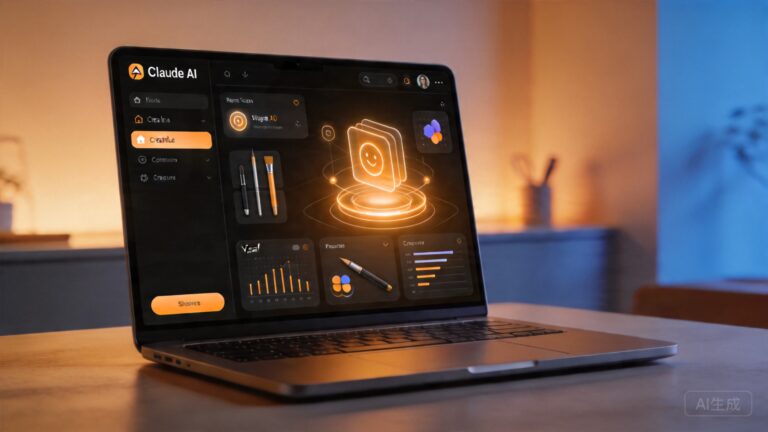
Claude Cowork is essentially a desktop-native AI agent that lives inside the Claude application on your computer. Unlike standard chatbots that respond to prompts with text, Cowork can interact with your actual files, applications, and operating system. You tell it what you need done, and it goes to work — opening the right programs, reading documents, filling in data, and saving results.
The key differentiator is accessibility. While Claude Code, Anthropic’s developer-focused tool, requires familiarity with command-line interfaces and terminal workflows, Cowork is designed for non-technical users. As Ars Technica described it, Cowork is “a Claude Code-like for general computing” — the same agentic capability, but pointed at everyday productivity tasks instead of software engineering.
The feature launched initially as a research preview for Pro and Max tier subscribers on macOS. By April 2026, Windows support reached feature parity, broadening the addressable market significantly.
How Does It Actually Work?
Under the hood, Claude Cowork uses a two-tier approach to task execution, according to Anthropic’s own documentation:
- First, it tries connected integrations. If you have linked your Slack, Google Calendar, or other supported apps, Claude attempts to accomplish the task through those official APIs. This is faster, safer, and more reliable.
- Only then does it fall back to desktop control. When no integration is available, Claude takes over your screen — moving the cursor, clicking buttons, typing into fields, and navigating applications just like a human would.
This design is intentional. Direct screen control is inherently riskier than API-based interaction, so Anthropic treats it as a last resort rather than the default path.
The desktop control technology was built on the foundation of Vercept AI, a startup Anthropic acquired roughly four weeks before shipping the feature. According to Vercept co-founder Kiana Ehsani, the team shipped their first product in less than a month after joining Anthropic — an unusually fast integration timeline for a major AI company acquisition.
“Everyone moves fast, everyone is incredibly smart, humble and supportive, and it’s really easy to get things done,” Ehsani wrote on X, crediting Anthropic’s internal culture as the biggest competitive advantage.
The Vercept AI Acquisition: A 10-Day Build
The speed of the Cowork launch is itself a story. Reports indicate that the core desktop-control capability was built in approximately 10 days following the Vercept AI acquisition. This rapid development cycle reflects Anthropic’s broader strategy of acquiring specialized capabilities and integrating them at pace rather than building everything from scratch.
Vercept AI specialized in AI-powered computer control — essentially teaching models to “see” a screen and interact with graphical user interfaces the way humans do. This technology, combined with Claude’s reasoning capabilities, created a foundation for a genuinely functional desktop agent.
From Chat App to Persistent Workspace
Anthropic has not stopped at basic file management. Recent updates point toward a more ambitious vision: turning Claude Desktop from a conversational tool into a managed operating surface for ongoing agent work.
According to a March 2026 report by TestingCatalog, Anthropic is developing a project layer for Cowork that would allow users to:
- Organize work within specific local folders
- Set scheduled, recurring tasks tied to individual projects
- Maintain persistent context and instruction sets per project
This would transform Cowork from a session-based tool into something closer to a persistent digital assistant — one that knows the context of each project and can execute repeatable workflows on a schedule. For teams running recurring research, reporting, or operations tasks, this is a significant capability upgrade.
Anthropic is also exploring a new auto-permission mode for Claude Code, sitting between full bypass (which requires sandboxed environments) and constant user prompts. This intermediate mode would let the AI decide when approval is necessary — a critical feature for enabling autonomous workflows while maintaining safety boundaries.
The Dispatch Feature: Controlling Your AI From Anywhere
One of the most practical additions to the Cowork ecosystem is Dispatch, launched alongside the desktop control features in March 2026. Dispatch allows users to remotely control their Claude agent from any device, including smartphones.
The workflow is straightforward: you start a Cowork session on your desktop, then use your phone to monitor progress, provide additional instructions, or approve actions. This decouples the user from the physical machine, making the AI agent genuinely useful for people who are mobile or working remotely.
As Forbes noted in their coverage, this update essentially lets you “control Claude Cowork with your phone” — a capability that transforms the desktop agent from a stationary tool into a portable one.
The Competitive Landscape: OpenAI Strikes Back
Anthropic’s moves have not gone unnoticed by competitors. In April 2026, OpenAI responded with significant upgrades to its Codex product, giving it expanded desktop control capabilities. According to TechCrunch, OpenAI is “taking aim at Anthropic” with a beefed-up Codex that offers comparable computer control functionality.
Meanwhile, Microsoft has been positioning its own Copilot Cowork as an alternative, though analysts note key architectural differences. Microsoft’s approach is more tightly integrated with the Windows and Office ecosystem, while Anthropic’s solution is designed to work across applications and platforms.
Google has also entered the fray with Deep Research and Deep Research Max agents, though these focus more on information-gathering workflows than desktop automation. The competitive dynamics suggest that desktop AI agents are becoming a central battleground in the broader AI platform war.
Real-World Use Cases: What Can Cowork Actually Do?
Early adopters and reviewers have identified several compelling use cases for Claude Cowork:
- Document organization: Sorting through years of files, renaming, categorizing, and archiving documents that have accumulated on a messy desktop.
- Spreadsheet automation: Opening CSV files, applying formulas, formatting data, and generating summary reports without manual intervention.
- Research compilation: Opening multiple browser tabs, extracting relevant information, and compiling it into a structured document.
- Email triage: Reading through inboxes, flagging important messages, and drafting responses for review.
- Data migration: Transferring information between applications that lack direct integration — for example, copying data from a PDF into a database application.
These use cases highlight Cowork’s core value proposition: it acts as a bridge between applications that don’t talk to each other natively, performing the kind of cross-application work that currently requires human intervention.
Security Concerns and Limitations
Despite its promise, Claude Cowork raises significant questions that Anthropic must address before broader adoption:
Giving an AI control over an entire desktop raises serious concerns around data privacy, error rates, and controllability — things Anthropic would likely need to address before a broader rollout.
— The Decoder, April 2026
Several specific concerns have emerged:
- Prompt injection attacks: Within days of Cowork’s launch, researchers demonstrated a file-stealing prompt injection vulnerability, showing that maliciously crafted files could potentially trick the AI into exfiltrating sensitive data.
- Irreversible actions: A widely publicized incident involving a venture capitalist showed Claude AI accidentally deleting 15 years of family photos and documents from a desktop, reportedly “nearly giving him a heart attack.” While this incident predated Cowork specifically, it illustrates the risks inherent in giving an AI unrestricted file access.
- Attack surface expansion: Full desktop control creates a significantly larger attack surface compared to browser-only agents. OpenAI’s ChatGPT Operator, which was limited to browser interactions, reportedly lost 75% of its users because people couldn’t understand what it was actually doing. Full desktop control amplifies this opacity problem.
Anthropic has acknowledged these risks and has kept Cowork in research preview status, suggesting that the company views safety and reliability as prerequisites for a general release.
Why Cowork Could Threaten Dozens of Startups
Fortune’s analysis of the Cowork launch identified a broader market impact: by enabling a single AI agent to perform tasks across multiple applications, Cowork potentially obsoletes a wide range of specialized productivity tools.
Consider the startups that exist to solve specific workflow problems — tools for document conversion, spreadsheet automation, file organization, data entry, and cross-application workflows. If Claude Cowork can perform these tasks natively by controlling the desktop, the value proposition of many of these tools diminishes significantly.
This is the same dynamic that made Claude Code disruptive in the developer tools market, now extended to the much larger productivity software market.
What Comes Next
The trajectory of Claude Cowork points toward a future where AI agents are deeply embedded in our daily computing workflows. Anthropic’s investment in projects, scheduled tasks, and auto-permission modes suggests that the company is building toward persistent, autonomous agents — digital workers that operate continuously on defined tasks rather than responding to individual prompts.
Several developments to watch in the coming months:
- General availability: When Cowork moves from research preview to full release, it will likely come with enhanced safety features and broader platform support.
- Enterprise features: Anthropic has already launched Managed Claude Agents for enterprises, and Cowork capabilities will likely be integrated into this offering for organizational deployment.
- Third-party integrations: As the integration-first approach matures, more application developers will likely build direct Claude Cowork integrations, reducing the need for screen-level control.
- Competitive responses: Expect rapid iteration from OpenAI, Google, and Microsoft as each company attempts to establish dominance in the desktop agent space.
The Bottom Line
Claude Cowork represents a meaningful step forward in the evolution of AI from conversational tool to functional agent. It is not perfect — the security concerns are real, the error rates need improvement, and the “black box” nature of autonomous desktop control makes many users uneasy.
But the core insight is powerful: instead of asking humans to learn how to work with AI, Anthropic is asking AI to learn how to work with human tools. That inversion — making the AI adapt to our existing software ecosystem rather than forcing us to adopt new interfaces — may be what finally makes AI agents useful to the mainstream.
For now, Cowork remains a research preview with significant limitations. But the pace of development — from acquisition to shipped product in roughly 10 days, followed by rapid iteration on projects, Dispatch, and Windows support — suggests that the gap between preview and production is closing fast.
If you are a Pro or Max subscriber with access to Claude Desktop, it is worth experimenting with Cowork today. Not because it is ready to fully automate your workflow, but because it offers a glimpse of a future where your computer actually works for you — not the other way around.
What tasks would you want an AI agent to handle on your computer? Share your thoughts in the comments below.
📖 Related: Anthropic’s Claude Cowork: How an AI Agent Built in 10 Days Is Reshaping the Desktop
📖 Related: Google Is Testing AI Chatbot Search for YouTube — and It Could Change Everything
📖 Related: Google Employees Revolt: Thousands Demand Pichai Reject Classified Military AI Contracts