Claude Is Connecting Directly to Your Personal Apps Like Spotify, Uber Eats, and TurboTax
Claude Is Connecting Directly to Your Personal Apps Like Spotify, Uber Eats, and TurboTax
The era of AI assistants that simply answer questions and draft emails is rapidly coming to an end. Anthropic’s Claude is evolving from a conversational chatbot into a full-fledged digital agent capable of connecting directly to the apps and services that power your daily life — from ordering dinner on Uber Eats to managing your Spotify playlists and filing taxes through TurboTax. This shift represents one of the most significant transformations in how humans will interact with artificial intelligence.
The Rise of AI Agents That Actually Do Things
For years, AI assistants have been largely passive tools. You ask a question, they provide an answer. You give a prompt, they generate text. But the paradigm is shifting toward agentic AI — systems that can plan, execute, and complete multi-step tasks across multiple applications without constant human supervision.
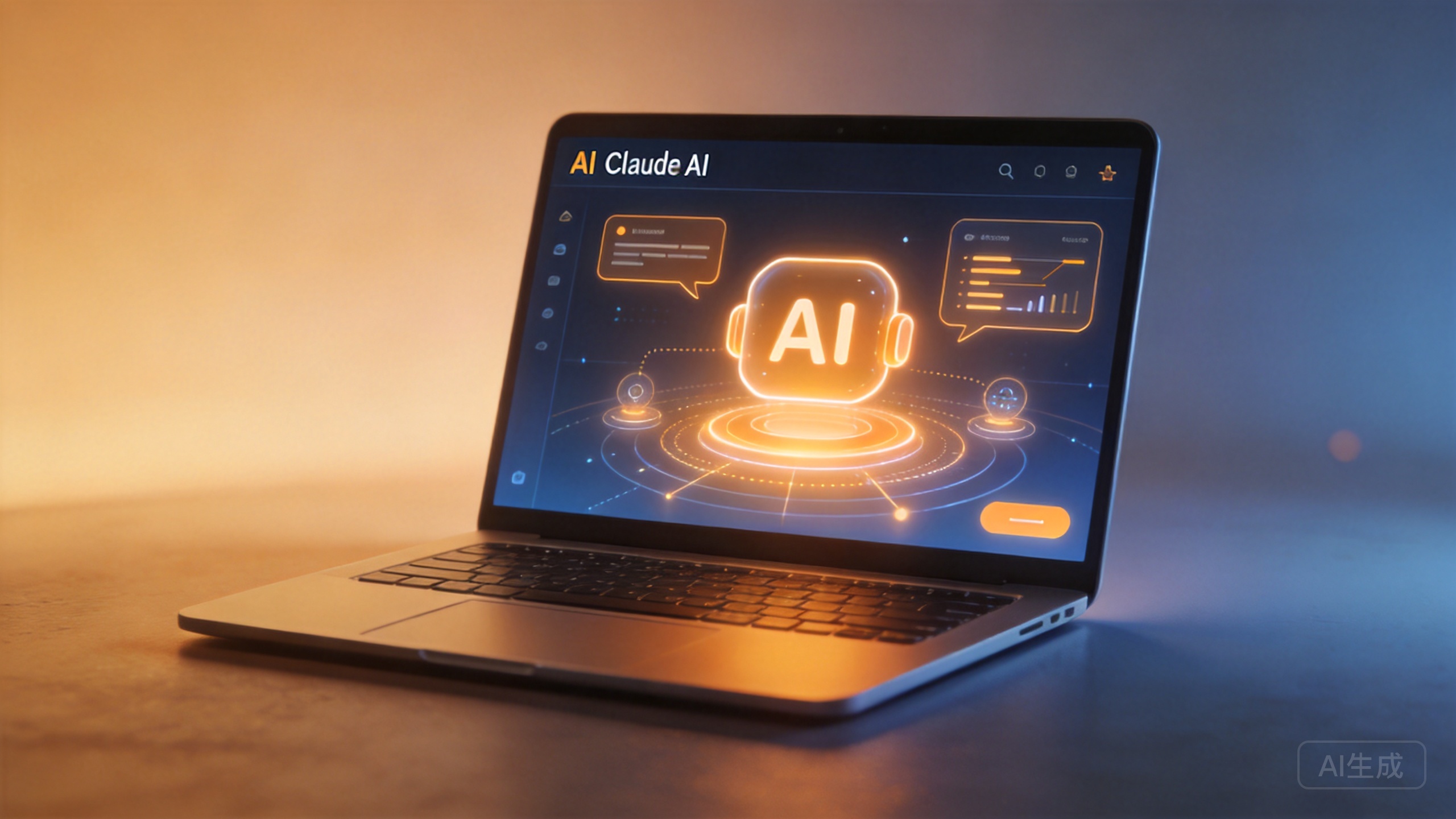
Anthropic has been at the forefront of this transformation. With the April 2026 launch of Claude Opus 4.7, the company delivered a model specifically optimized for agent workloads. According to Anthropic’s official announcement, Opus 4.7 brings “stronger performance across coding, agents, vision, and multi-step tasks, with greater thoroughness and consistency on the work that matters most.” Early-access testers reported that the model “catches its own logical faults during the planning phase and accelerates execution, far beyond previous Claude models.”
But the real story isn’t just about model capability — it’s about connectivity. Claude’s expanding ecosystem of Skills, Connectors, and Plugins is creating a framework where the AI can interface directly with third-party applications, effectively becoming a universal remote control for your digital life.
How Claude Connects to Your Apps
Anthropic has built a multi-layered integration architecture that enables Claude to interact with external services:
- Skills: Custom capabilities that teach Claude how to perform specific tasks within particular applications. Think of these as specialized training modules that give Claude domain expertise for individual apps.
- Connectors: Pre-built bridges between Claude and popular services, allowing the AI to read data, trigger actions, and synchronize information across platforms.
- Plugins: Extendable modules for Claude Code and Claude Cowork that add new functionalities, from code execution to API interactions.
This architecture mirrors how smartphone apps transformed mobile phones from communication devices into pocket computers. Claude’s connectors and skills are transforming an AI chatbot into a platform for automated action.
Anthropic has already shipped native integrations with major productivity suites, including Claude for Slack, Claude for Excel, Claude for PowerPoint, Claude for Word, and Claude for Chrome. These aren’t superficial add-ons — they represent deep integrations where Claude can read context, generate content, and perform actions within the native environment of each application.
The Spotify, Uber Eats, and TurboTax Vision
Imagine telling Claude: “Order my usual from the Thai place on Uber Eats, put together a workout playlist on Spotify, and check if I have any tax deductions I’m missing in TurboTax.” A single request, three different platforms, one AI agent executing everything.
This isn’t science fiction — it’s the logical endpoint of the infrastructure Anthropic and its partners are building right now. The Claude platform already supports:
- Financial services integrations — Claude’s solutions page highlights dedicated capabilities for financial services, suggesting deep integration potential with tax software, banking apps, and investment platforms.
- Customer support agent deployment — Companies are already using Claude as an AI agent that can access CRM systems, process tickets, and take actions on behalf of users.
- Cowork capabilities — Claude Cowork enables collaborative AI workflows where the agent participates in team processes, accesses shared tools, and coordinates across platforms.
The technical foundation for app-level integration exists. What’s evolving is the breadth and depth of connections — and the trust frameworks that allow users to confidently give an AI agent permission to act on their behalf across sensitive services like financial and food delivery apps.
Why This Matters: The Platform Play Behind the Scenes
Anthropic isn’t building these capabilities in isolation. The company’s ecosystem strategy is backed by massive investments and partnerships that accelerate Claude’s integration potential:
“Anthropic is the most committed AI company in the world to the partner ecosystem — and we’re putting $100 million behind that this year to prove it.” — Steve Corfield, Head of Global Business Development and Partnerships, Anthropic
In March 2026, Anthropic launched the Claude Partner Network with an initial $100 million commitment to help enterprises adopt Claude. This network is building the implementation infrastructure that will connect Claude to thousands of business applications.
Meanwhile, Google announced plans to invest up to $40 billion in Anthropic, and the company has expanded its collaboration with Amazon for up to 5 gigawatts of new compute capacity. These aren’t just financial deals — they’re ecosystem plays. Google Cloud’s Vertex AI, Amazon Bedrock, and Microsoft Foundry all host Claude, meaning the model is available wherever enterprises already run their applications.
Claude is also the only frontier AI model available on all three leading cloud providers — AWS, Google Cloud, and Microsoft — making it uniquely positioned to integrate with the full spectrum of enterprise and consumer software.
The Competitive Landscape
Claude isn’t alone in pursuing the AI agent vision. OpenAI’s ChatGPT has plugins and actions, Google’s Gemini integrates with Workspace, and Apple’s Apple Intelligence connects with iOS apps. But Anthropic’s approach differs in key ways:
Brand safety and trust. Claude ranks highest on honesty, jailbreak resistance, and brand safety according to Anthropic’s own assessments. When you’re giving an AI agent permission to order food, manage finances, or access personal data, trust isn’t a nice-to-have — it’s the primary requirement.
Developer platform strength. The Claude Developer Platform provides APIs and tools specifically designed for building production-grade agents. Companies like SK Telecom, Windsurf, Amazon Q, GitHub Copilot, Replit, Augment Code, Intercom, Cursor, and Warp are already building on Claude’s agent capabilities.
Agent-specific optimization. Unlike general-purpose models that have been adapted for agent work, Opus 4.7 was designed with agent scenarios in mind from the ground up, delivering what Anthropic claims is a “3x reduction in code churn” compared to alternatives.
Practical Steps: How to Prepare for the AI Agent Era
Whether you’re a consumer excited about AI-powered convenience or a business leader evaluating agentic AI, here’s how to prepare:
- Start with low-risk tasks. Begin by using Claude’s existing app integrations (Slack, Chrome, Office tools) to build familiarity with how AI agents interact with your software.
- Explore Skills and Connectors. Browse the Claude Skills marketplace to discover what capabilities are already available. The ecosystem is growing rapidly.
- Understand the permission model. As Claude gains the ability to act on your behalf, learn how authentication and authorization work. Which actions require explicit approval? Which can be automated?
- Consider privacy implications. Connecting an AI agent to your financial apps, email, and personal services means granting it significant access. Review data handling policies and set appropriate boundaries.
- Watch the Partner Network. The Claude Partner Network’s $100 million investment is creating a pipeline of enterprise integrations. Many consumer-grade connectors will follow the same patterns established in business deployments.
The Road Ahead
Anthropic’s trajectory is clear. The company recently launched Claude Design through Anthropic Labs — a product that lets users collaborate with Claude to create polished visual work, including designs, prototypes, slides, and presentations. It’s powered by Opus 4.7 and available to Claude Pro, Max, Team, and Enterprise subscribers. This is the kind of deep, application-level integration that will extend to every category of software.
The combination of Claude’s expanding integration ecosystem, its agent-optimized models, massive backing from Google and Amazon, and a growing partner network creates the conditions for a future where your AI assistant doesn’t just talk about your apps — it uses them on your behalf.
The question is no longer whether AI agents will connect to your personal apps. The infrastructure is being built right now. The question is: which apps will connect first, and are you ready to hand over the keys?
What’s Your Take?
Would you trust an AI agent to manage your Spotify playlists, order your meals, or handle your tax filing? Which app integration would be most valuable to you? Share your thoughts in the comments below, and subscribe to stay updated as the AI agent landscape continues to evolve at breakneck speed.
📖 Related: Claude Now Connects to Spotify, Uber Eats, TurboTax — and Your Entire Digital Life
📖 Related: Anthropic’s Mythos Breach: How a Discord Group Humbled the AI Safety Leader
📖 Related: Claude is Connecting Directly to Your Personal Apps Like Spotify, Uber Eats, and TurboTax