Anthropic Launches Cowork: The Claude Desktop Agent That Works in Your Files Without Any Coding
Anthropic Launches Cowork: The Claude Desktop Agent That Works in Your Files Without Any Coding
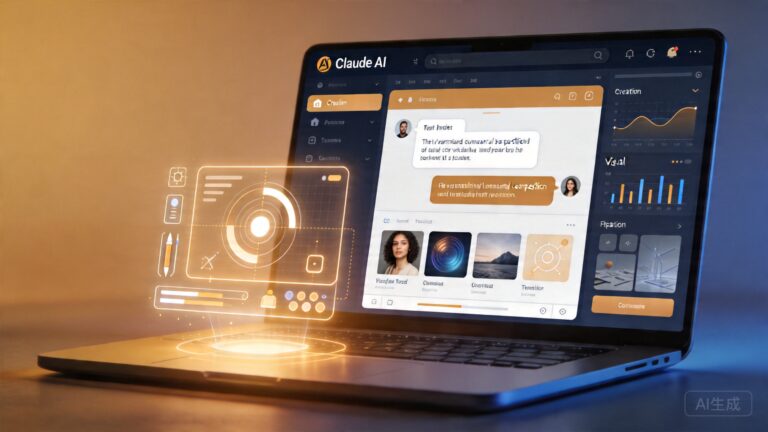
Anthropic has officially unveiled Cowork, a groundbreaking new feature for Claude Desktop that transforms the AI assistant into a fully autonomous agent capable of working directly with your personal files and applications — no programming knowledge required. This marks a pivotal moment in the evolution of consumer AI, moving beyond conversational chatbots to genuinely autonomous digital workers that can complete complex, multi-step tasks across your computer.
The launch positions Anthropic in direct competition with OpenAI’s Operator and Google’s Gemini-powered agents, but with a distinctly different approach: rather than requiring users to set up development environments or write scripts, Cowork is designed from the ground up to be accessible to anyone who can point, click, and describe what they need done.
What Is Cowork, and How Does It Work?
Cowork is essentially an agentic layer built on top of Claude Desktop that grants the AI read and write access to your local files, folders, and applications. Once you define a workspace — a designated set of directories and file types — Claude can autonomously navigate, read, modify, and create content within those boundaries.
The system operates on a principle of constrained autonomy. Users establish clear permissions upfront: which folders Claude can access, which file types it can modify, and what actions it is authorized to perform. Within these guardrails, Claude operates independently, making decisions about file organization, content creation, data processing, and document formatting without requiring step-by-step instructions for each action.
Here’s what makes Cowork fundamentally different from previous AI desktop tools:
- Natural language task delegation: Instead of writing scripts or workflows, you simply describe what you want in plain English. “Organize my Downloads folder by file type and date” or “Find all invoices from Q1 and create a summary spreadsheet” — Cowork understands and executes these requests end-to-end.
- Multi-step reasoning across files: Cowork can read a document, extract key information, cross-reference it with another file, and generate a new output — all in a single request. This capability bridges the gap that has traditionally required custom automation scripts or manual copy-paste workflows.
- Contextual awareness: The agent understands the semantic meaning of your files, not just their metadata. It can differentiate between a draft and a final document, identify related files even if they have different naming conventions, and apply appropriate formatting standards based on content type.
- Safety-first architecture: Every action Cowork takes is logged, and users can review changes before they are finalized. The agent operates within user-defined boundaries, preventing accidental modifications to critical system files or sensitive documents.
The Technology Behind Cowork
Cowork is powered by Anthropic’s latest Claude model architecture, which has been specifically optimized for agentic tasks involving file I/O and multi-step reasoning. The system uses a combination of techniques that have emerged from recent advances in AI agent research:
“We designed Cowork around the idea that the most powerful AI agent is one that understands context, respects boundaries, and can be trusted to work independently within the space you define for it.” — Anthropic Engineering Team
At its core, Cowork leverages retrieval-augmented reasoning to maintain awareness of file contents across sessions. When you ask Claude to work with your documents, it builds an internal index of the relevant files, understanding their structure, content, and relationships. This index persists between interactions, allowing the agent to resume complex projects without starting from scratch.
The agent also employs tool-use optimization — a technique where the AI learns which file operations are most efficient for specific tasks. Over time, Cowork develops patterns for common workflows, reducing the number of intermediate steps needed to complete recurring tasks like data cleaning, document formatting, and content organization.
Security is handled through a sandboxed execution model. Cowork operates within a virtualized environment that mirrors your specified workspace, ensuring that all file operations are validated before being committed to your actual filesystem. This approach prevents the types of catastrophic errors that have plagued earlier autonomous AI systems, where agents accidentally deleted or corrupted important files.
Real-World Use Cases That Change How You Work
The practical applications of Cowork span virtually every profession and personal workflow. Here are some of the most transformative use cases that early testers have identified:
Document Processing and Management
For professionals who deal with large volumes of documents — legal teams, HR departments, academic researchers — Cowork represents a paradigm shift. Instead of spending hours manually sorting, renaming, and categorizing files, users can delegate the entire process to Claude with a single natural language instruction.
Consider a law firm receiving hundreds of case documents weekly. With Cowork, a paralegal could instruct the agent to: “Read all PDFs received this week, extract case numbers and client names, rename files using our standard format (CaseNumber_ClientName_Date), and organize them into the appropriate practice area folders.” What previously required hours of manual work now completes autonomously in minutes.
Data Analysis and Reporting
Cowork excels at transforming raw data into structured insights. Financial analysts, marketing professionals, and operations managers can point the agent at a collection of CSV files, spreadsheets, or database exports and receive comprehensive analysis reports without writing a single formula or script.
For example, a marketing manager could ask Cowork to: “Pull data from all campaign performance spreadsheets in the Q1 Marketing folder, calculate ROI for each channel, identify the top three performing campaigns, and create a presentation-ready summary with charts.” The agent reads the files, performs the calculations, generates visualizations, and produces a polished output document — all automatically.
Content Creation and Editing
Writers, editors, and content creators benefit from Cowork’s ability to manage complex editorial workflows. The agent can review drafts for consistency, check facts against source documents, reformat content to match style guides, and even generate supplementary materials like summaries, abstracts, or social media excerpts from longer documents.
A content team managing a blog could use Cowork to: “Review all draft posts in the Staging folder, check for consistency with our style guide (reference file: style_guide_v3.docx), flag any factual claims that need citations, and prepare final versions ready for publishing.” This transforms a multi-person editorial review process into a single automated step.
How Cowork Compares to the Competition
The AI agent landscape has become increasingly crowded, and Cowork enters a market where several major players are racing to deliver autonomous desktop capabilities. Here’s how Anthropic’s offering stacks up:
OpenAI’s Operator focuses primarily on browser automation — controlling web applications through a virtual machine environment. While powerful for web-based tasks, it lacks the deep local file integration that Cowork provides. Cowork operates directly on your filesystem, giving it native access to documents, spreadsheets, and applications without the overhead of a virtualized browser session.
Google’s Gemini-powered agents are tightly integrated with Google Workspace applications but have limited capability outside the Google ecosystem. Cowork, by contrast, is platform-agnostic and works with any file type or application on your computer, regardless of whether it’s a Google product.
Microsoft’s Copilot agents offer file-level automation within the Microsoft 365 suite but require enterprise-level subscriptions and IT configuration for advanced features. Cowork’s consumer-first approach means any individual user can start automating their workflows immediately, without organizational approvals or complex setup procedures.
The key differentiator for Cowork is its zero-coding philosophy. While other solutions often require users to define workflows through visual programming interfaces, script editors, or API configurations, Cowork operates entirely through natural language interaction. This dramatically lowers the barrier to entry, making agentic AI accessible to the estimated 95% of computer users who don’t know how to code.
Privacy and Security: What You Need to Know
Given that Cowork operates directly on your personal files, privacy and security are understandably top-of-mind concerns. Anthropic has addressed these through several architectural and policy decisions:
- Local-first processing: Whenever possible, file operations are processed locally on your machine rather than being sent to cloud servers. This means sensitive documents never leave your computer during routine tasks.
- Explicit workspace definitions: Cowork only has access to directories you explicitly designate. It cannot roam your filesystem or access files outside your approved workspace, preventing unintended data exposure.
- Audit trail logging: Every action Cowork takes — every file read, every modification, every creation — is recorded in a detailed log that users can review at any time. This transparency ensures you always know exactly what the agent has done.
- Reversible operations: Cowork maintains a rollback history for all changes, allowing you to undo any modification the agent has made. This safety net eliminates the risk of permanent data loss due to agent errors.
- Anthropic’s constitutional AI framework: The underlying model incorporates the same safety principles that govern Claude’s behavior in conversational settings, including adherence to user instructions, refusal of harmful requests, and transparent reasoning about its actions.
Pricing and Availability
Anthropic has structured Cowork as a premium feature within its Claude Desktop ecosystem. The exact pricing tiers are designed to accommodate different user segments:
- Free tier: Basic file reading and organization capabilities with limited workspace size (up to 500 MB of indexed files) and a cap of 50 agent tasks per month.
- Pro tier: Full workspace access, unlimited tasks, priority processing, and advanced features like multi-file cross-referencing and automated report generation. Positioned for power users and small teams.
- Enterprise tier: Enhanced security controls, team workspace sharing, compliance auditing, and dedicated support. Designed for organizations with strict data governance requirements.
Cowork is available as part of the Claude Desktop application for both macOS and Windows, with a Linux version planned for later this year. The agent requires a minimum system specification that includes 8 GB of RAM and 2 GB of available storage for the local processing cache.
The Bigger Picture: Where AI Agents Are Heading
Cowork represents more than just a new product feature — it signals a fundamental shift in how we think about human-computer interaction. For decades, the paradigm has been that humans tell computers exactly what to do through precise commands, scripts, or graphical interfaces. Cowork inverts this relationship: humans describe the outcome they want, and the AI figures out how to achieve it.
This shift has profound implications for productivity, accessibility, and the future of work. Tasks that previously required specialized software skills or technical knowledge are becoming accessible to anyone who can articulate their needs in natural language. The digital divide between those who can automate their workflows and those who cannot is narrowing significantly.
However, this transformation also raises important questions about the future of certain job categories, the accuracy of autonomous AI decision-making, and the ethical implications of delegating increasingly complex tasks to machines. Anthropic’s measured approach — emphasizing safety, transparency, and user control — suggests the company is aware of these challenges and is attempting to address them proactively.
What You Should Do Next
If you’re interested in exploring Cowork, here’s a practical roadmap to get started:
- Download Claude Desktop from Anthropic’s official website and create an account if you don’t already have one.
- Start with a small, low-risk workspace — perhaps a folder containing non-critical documents — to familiarize yourself with how Cowork operates.
- Begin with simple tasks like file organization or basic content summarization before progressing to more complex multi-step workflows.
- Review the audit logs regularly to understand how the agent makes decisions and to build confidence in its reliability.
- Gradually expand your workspace as you become comfortable with the agent’s capabilities and limitations.
The age of AI agents that can genuinely work alongside us — not just answer questions but actively complete tasks — is here. Cowork is Anthropic’s opening move in what promises to be one of the most competitive and transformative technology categories of the decade. Whether you’re a solo professional looking to reclaim hours of administrative time or a team leader seeking to streamline collaborative workflows, now is the moment to start exploring what autonomous file-based AI can do for you.
Have you tried Cowork yet? What workflows are you most excited to automate? Share your thoughts in the comments below.
📖 Related: DeepSeek V4 Preview: China AI Upstart Challenges Silicon Valley Again
📖 Related: China’s DeepSeek Previews New AI Model a Year After Jolting US Rivals
📖 Related: OpenAI’s Latest Model Evolution: What’s Real, What’s Hype, and Why Coding Keeps Getting Better