Anthropic Just Built a Claude Agent for Non-Coders — And It Only Took Them a Week
Anthropic Just Built a Claude Agent for Non-Coders — And It Only Took Them a Week
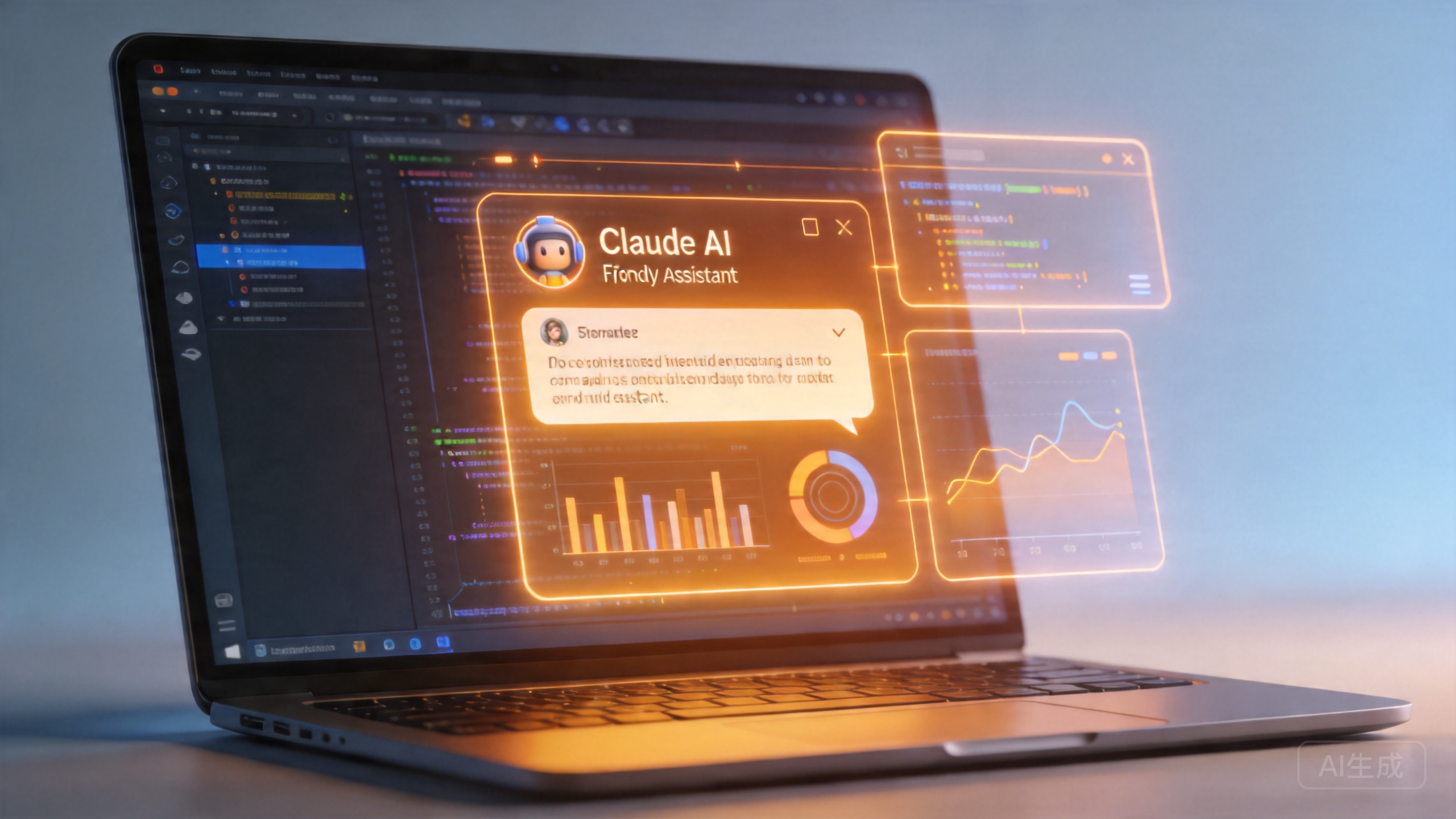
Anthropic released Cowork on Monday, and if you’ve been watching the AI agent race closely, this one deserves your attention. It’s a new capability that extends the power of Claude Code — their wildly successful developer tool — to everyday users who don’t write a single line of code. Here’s the kicker: the team built the entire feature in approximately a week and a half, largely using Claude Code itself.
That’s not a typo. A week and a half. An AI coding tool used to build a consumer-facing AI product. If that doesn’t feel like the future folding in on itself, I’m not sure what would.

How a Coding Tool’s Accidental Users Sparked a New Product
The genesis of Cowork is one of those product origin stories that sounds almost accidental — but really isn’t.
Back in late 2024, Anthropic launched Claude Code, a terminal-based tool designed to help software engineers automate tedious programming tasks. It was aimed squarely at developers. But something unexpected happened. Users started using it for everything except coding.
Boris Cherny, an engineer at Anthropic, described the phenomenon on X:
“Since we launched Claude Code, we saw people using it for all sorts of non-coding work: doing vacation research, building slide decks, cleaning up your email, cancelling subscriptions, recovering wedding photos from a hard drive, monitoring plant growth, controlling your oven.”
Think about that list for a second. Vacation research. Wedding photo recovery. Oven control. These aren’t the use cases you’d expect from a terminal-based developer tool. But they reveal something fundamental: the underlying Claude Agent architecture — powered by what Anthropic describes as their best model, Opus 4.5 — turned out to be exceptionally capable at general task execution, not just code generation.
Anthropic noticed this shadow usage pattern and made a strategic decision. Rather than fight it, they leaned in. They stripped away the command-line complexity and built Cowork: a simpler interface that lets anyone — not just developers — work with Claude in the very same agentic way.
How Cowork Actually Works: The Folder-Based Agent Architecture
Here’s where Cowork diverges sharply from the standard chat interface you’re probably used to with ChatGPT, Gemini, or even regular Claude.
Instead of pasting text into a chat box and waiting for a response, Cowork operates on a folder-based model. You designate a specific folder on your local machine that Claude can access. Within that sandbox, the AI agent gains the ability to read existing files, modify them, or create entirely new ones.
Anthropic offers several concrete examples of what this looks like in practice:
- Reorganize a cluttered downloads folder — Claude sorts through messy files and intelligently renames each one based on content
- Generate expense spreadsheets — feed it a collection of receipt screenshots and it produces a structured spreadsheet
- Draft reports from scattered notes — pull together information from multiple documents into a coherent first draft
- Process research materials — organize, summarize, and cross-reference documents you’ve dumped into the folder
The architecture relies on what’s called an “agentic loop.” When you assign a task, Claude doesn’t just spit out a text response. It formulates a plan, executes steps — sometimes in parallel — checks its own work, and asks for clarification if it hits a roadblock. You can queue multiple tasks and let Claude process them simultaneously.
Anthropic describes the experience as feeling “much less like a back-and-forth and much more like leaving messages for a coworker.” That comparison is deliberate. The name “Cowork” isn’t casual branding — it’s a statement about the kind of relationship they want users to have with the tool.
What’s Different From Claude Code — And Why It Matters
If you’re familiar with Claude Code, you might wonder: why not just let non-technical users into the existing tool? The answer comes down to friction and trust.
Claude Code runs in a terminal. It expects users to be comfortable with command-line interfaces, file paths, and at least a passing understanding of how software projects are structured. That’s a significant barrier for someone who just wants to organize their receipts or plan a vacation.
Cowork removes that barrier entirely. The interface is designed around folders — something every computer user already understands. You point Claude at a folder, describe what you want done, and walk away. The cognitive load is dramatically lower.
But there’s a trust dimension too. Giving an AI agent read-write access to files on your computer is a bigger ask than letting it generate text in a chat window. Anthropic has addressed this by sandboxing access to a single, user-designated folder. The agent can’t roam freely across your filesystem. It stays within the boundaries you set.
Pricing, Availability, and the Catch
Here’s the part that matters most for most people: Cowork isn’t free, and it isn’t available to everyone.
Currently, it’s a research preview available exclusively to Claude Max subscribers — Anthropic’s top-tier plan priced between $100 and $200 per month, depending on usage. And for now, it’s only available through the macOS desktop application.
That pricing puts Cowork squarely in the “power user” territory. It’s not aimed at casual users who might benefit from it — at least, not yet. The research preview label also suggests this is still evolving, with potential changes to functionality, pricing, and availability.
Windows and Linux support hasn’t been announced, though given the folder-based architecture, extending to those platforms seems like an engineering task rather than a fundamental redesign.
The Bigger Picture: AI Agents Are Finally Getting Practical
For the past year, the industry narrative has focused almost exclusively on large language models that can write poetry, debug code, or pass bar exams. Impressive, sure. But the real enterprise value — the thing that actually moves needle on productivity — lies in an AI that can open a folder, read a messy pile of documents, and produce structured output without constant human hand-holding.
Cowork positions Anthropic to compete not just with OpenAI and Google in conversational AI, but with Microsoft’s Copilot in the burgeoning market for AI-powered productivity tools. This is a different battlefield entirely.
Microsoft has been pushing Copilot hard into the enterprise, integrating it across Office 365, Windows, and GitHub. Google has Gemini woven into Workspace. Anthropic, until now, has been primarily known for its model capabilities and developer tools. Cowork is their first serious play at the broader productivity market.
The fact that they built it in roughly ten days using their own tool is the kind of meta-narrative that makes you stop and think. If an AI can help build a consumer AI product that quickly, what does that say about the pace of innovation going forward?
Who Should Care About This Right Now
Let me be honest about who this is for — and who it isn’t.
If you’re a Claude Max subscriber on macOS, Cowork is worth trying immediately. The folder-based agent model genuinely feels different from standard chat, and the ability to queue tasks asynchronously is a workflow improvement that’s hard to unlearn once you’ve used it.
If you’re evaluating AI productivity tools for your team, this should be on your radar. The folder-based approach sidesteps some of the integration challenges that plague tools like Copilot, which require deep platform embedding to be truly useful.
If you’re waiting for broader availability, I’d expect Cowork to roll out to lower-tier Claude plans within a few months, especially if the research preview generates strong engagement metrics. The barrier right now is pricing, not technology.
If you’re not already in the Anthropic ecosystem, this is still worth watching. The agentic loop architecture — plan, execute, verify, clarify — is likely to become a standard pattern across AI tools, regardless of which company popularized it first.
The Risks and Limitations You Should Know About
No product launch is without trade-offs, and Cowork has a few worth flagging:
- Research preview status means the feature may be unstable, incomplete, or subject to significant changes. Don’t build critical workflows around it yet.
- macOS only for now excludes a large chunk of potential users, especially in enterprise environments where Windows dominates.
- Folder-level access control is a good security measure, but it also means you can’t easily ask Cowork to work across multiple folders or system locations in a single task.
- The $100-$200/month price tag puts this out of reach for individual users who might benefit most from it — exactly the people Anthropic says the tool is designed for.
What Comes Next
Anthropic’s move here signals something important: the era of “AI that talks” is giving way to the era of “AI that does.” Cowork isn’t a chatbot. It’s an agent that takes action on your files, produces tangible outputs, and operates asynchronously. That’s a fundamentally different product category.
If the research preview goes well, expect to see this feature expanded to more platforms, more Claude subscription tiers, and potentially integrated with cloud storage services like Google Drive or Dropbox. The folder metaphor translates cleanly to cloud directories, and that would open up a massive new use case.
For now, if you have access to Claude Max on macOS, give Cowork a try. Point it at your downloads folder and see what happens. The worst case is a reorganized file directory. The best case is a glimpse at how AI agents will actually change the way we work — not someday, but starting right now.
What do you think — is folder-based AI the right approach for mainstream agents, or should AI tools be doing something entirely different? Drop your thoughts in the comments below.
📖 Related: Anthropic Releases Claude Opus 4.7: A Major Upgrade Amid Mythos Preview Buzz
📖 Related: Anthropic’s Claude Opus: The Flagship Model That Redefined AI Reasoning
📖 Related: Anthropic Releases Claude Opus 4.7: A New Flagship Model Built for Autonomy